Sima's Roots and Fruits
Pawpaw
Pawpaw
Couldn't load pickup availability
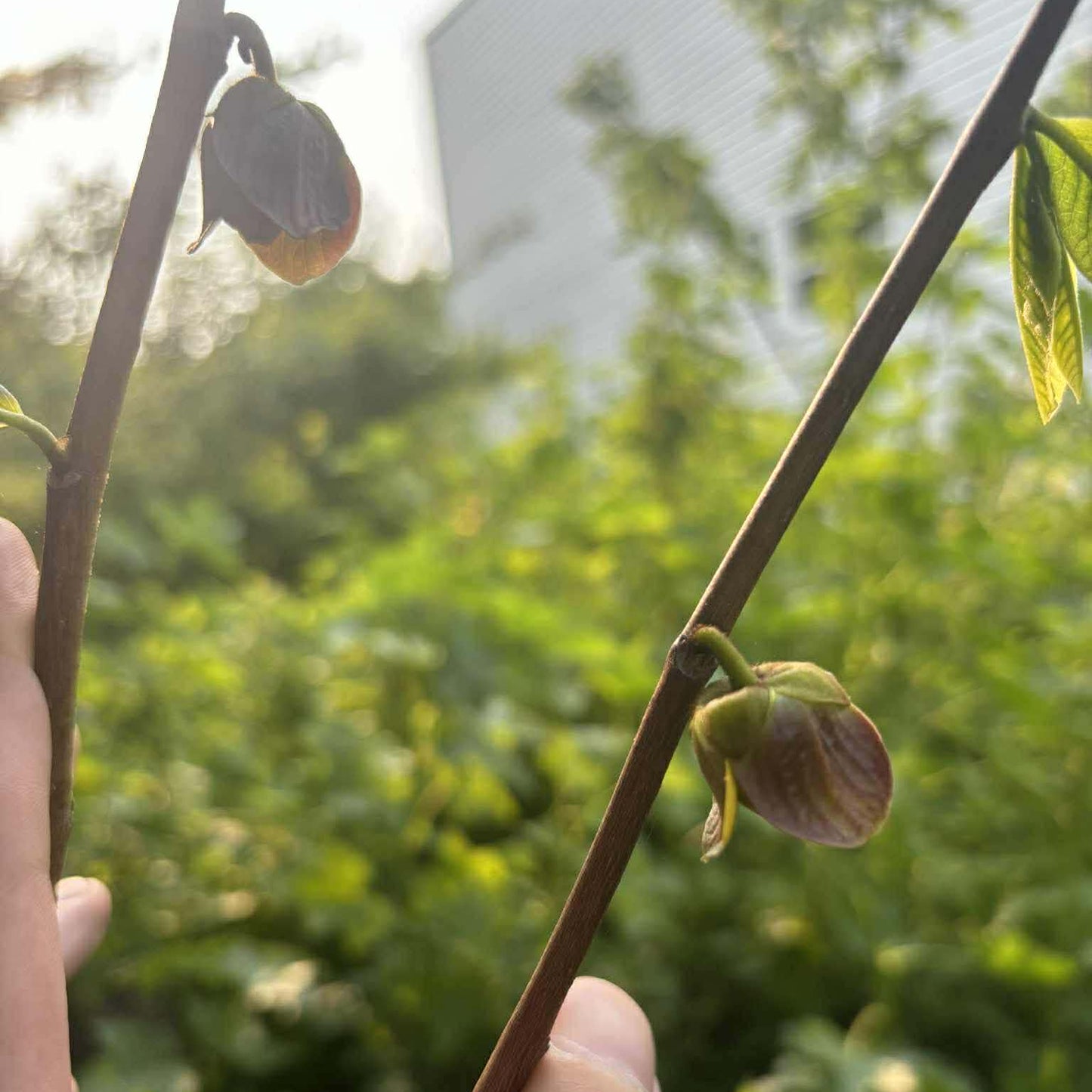
Asimina triloba. This is Canada's one and only native tropical fruit tree! These trees are slow-growing, reaching a maximum height between 15' and 25' at maturity. Fruit flavour depends on the specific genetics, with flavours of banana, custard, mango, passionfruit, and caramel. The trees are a little fussy in the first couple of years, but have little to no insect or pest issues after that. You will need two trees for pollination, so plan accordingly! Hardy to zone 4b, these can be grown throughout most of New Brunswick.
The trees that are offered for sale are seedlings, all are 5-10'' in height. One group is seedlings from named-variety parents that are growing near Fredericton, NB. One of the parents produces delicious fruit with a strong mango flavour. The seedlings are not going to be identical to the parents, but they're likely to also be extra-delicious. The other group is a luck-of-the-draw seedlings, with seeds that came from a mix of wild and improved varieties.
Specific growing instructions: to harvest the most fruit, plant your pawpaw tree in full sun. However, baby pawpaws will scorch in full sun, so that's a problem. To solve the issue, make sure to provide shade for the first couple of summers - whether it's by a little teepee of dead tree branches, or some shade cloth wrapped around a metal cage, or even a pallet secured to the south/west of the young tree. As long as it's getting dappled shade, it will be great! After 2 summers, you can remove the shade, and the tree will take it from there. In the winter, provide some protection from desiccating winds and any deep freezes - deep mulching and some burlap should do the trick.
Alternatively, as a solution for both problems, pot your baby tree into a large (2-3 gallon) container and pamper it for a year or two before planting them out in the garden!
Pawpaws take a long time to fruit - it's not uncommon to wait 5-6 years for flowers. Note that even once it flowers, it's likely that the tree will shed the fruitlets for the first season or two before letting the fruit mature.
Share